

Phone
07404526677
hello@mrgreat.co.uk

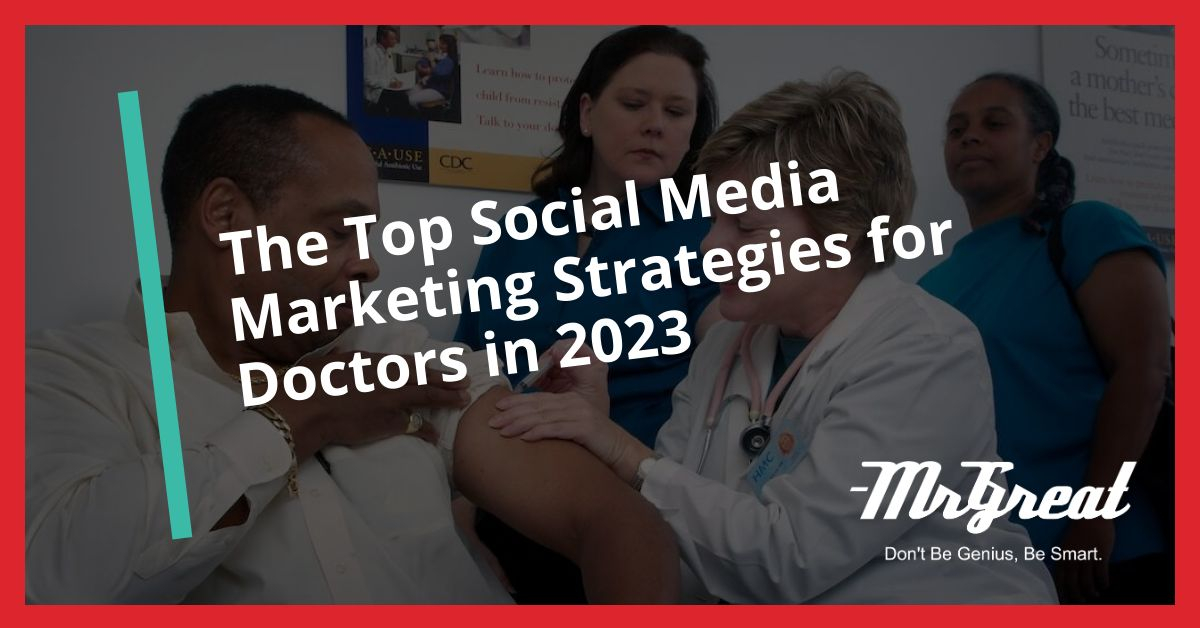
Social media has become an integral part of our lives, and it's now playing a significant role in healthcare.
Doctors and healthcare professionals are utilizing social media to engage with their patients, share valuable health information, and promote their services. However, social media marketing for doctors requires a different approach than traditional marketing strategies.
In this article, we will explore the top social media marketing strategies for doctors in 2023.
Social media marketing allows doctors to connect with their patients, provide them with valuable health information, and promote their services. By utilizing social media, doctors can build a strong online presence and establish themselves as thought leaders in their respective fields. Social media also allows doctors to engage with their patients in real-time, addressing their concerns and answering their questions.
The first step in creating an effective social media marketing strategy is to identify your target audience. Doctors should determine the demographics of their ideal patients, including age, gender, location, and health concerns. This information can help doctors create targeted social media content that resonates with their audience.
Not all social media platforms are created equal, and doctors should choose the ones that are most relevant to their audience. For example, Facebook is ideal for doctors targeting middle-aged and older patients, while Instagram is better for reaching a younger demographic. Twitter is an excellent platform for sharing timely health information and engaging in conversations with other healthcare professionals.
Creating high-quality content is essential for any social media marketing strategy. Doctors should provide their followers with valuable health information, tips, and advice that is easy to understand and implement. High-quality content can also help doctors establish themselves as thought leaders in their respective fields.
Video content is becoming increasingly popular on social media, and doctors should leverage this trend to engage with their patients. Videos can provide patients with a more personal connection to their doctor and make complex medical information easier to understand.
While social media is a valuable marketing tool, doctors should avoid being too salesy on their platforms. Instead, they should focus on providing valuable content to their followers and promoting their services in a subtle and non-intrusive way.
Interacting with followers is an important part of social media marketing for doctors. Doctors should respond to patient inquiries, address concerns, and engage in conversations with their followers. This can help build trust and establish a strong online presence.
Reviews and testimonials from satisfied patients can be a powerful marketing tool for doctors. Doctors should encourage their patients to share their experiences on social media and provide positive feedback on review sites.
Collaborating with other healthcare professionals on social media can help doctors expand their reach and establish themselves as thought leaders in their respective fields. Doctors can engage in conversations with other healthcare professionals, share relevant information, and even participate in panel discussions or interviews to showcase their expertise.
Social media is constantly evolving, and doctors need to stay up-to-date with the latest trends and features. This includes being aware of new social media platforms, understanding algorithm changes, and adopting new technologies such as live video streaming or chatbots.
To gauge the effectiveness of their social media marketing efforts, doctors should track key metrics and analyze the results. This includes monitoring engagement rates, follower growth, website traffic, and conversions. By measuring the success of their campaigns, doctors can identify what works and make adjustments for better results.
There are some common mistakes that doctors should avoid when implementing their social media marketing strategies. These include inconsistent posting, neglecting to respond to patient inquiries, sharing unverified or inaccurate information, and being too promotional or self-centered in their content. It's important to be mindful of these mistakes and strive for professionalism and authenticity.
Negative feedback is inevitable, and it's crucial for doctors to handle it in a professional manner. When encountering negative comments or reviews, doctors should respond promptly, empathize with the patient's concerns, and offer a solution or explanation. Handling negative feedback effectively can demonstrate good patient care and build trust with the online community.
Patient privacy is of utmost importance in healthcare, and doctors must ensure that they adhere to privacy regulations when using social media. This includes obtaining patient consent before sharing any personal information, using secure platforms for communication, and being cautious about discussing specific patient cases.
In today's digital age, social media marketing has become an essential tool for doctors to connect with their patients and promote their services. By understanding their target audience, choosing the right platforms, creating high-quality content, and engaging with their followers, doctors can establish a strong online presence and build trust.
It's important to stay up-to-date with the latest trends, measure the success of marketing campaigns, and handle negative feedback professionally. By leveraging the power of social media, doctors can enhance their visibility and provide valuable health information to a wider audience.

YOU’D BETTER DO SOMETHING ABOUT IT